

Golf marketing has changed a great deal in recent years. Clubs no longer compete only with the course next door: they compete with other destinations, other sports and every leisure option a player has on their phone. That is why having a good course is no longer enough to fill the tee sheet or keep the membership base.
In this article we summarise six golf marketing strategies we apply with the clubs we work with, designed to attract new players, build member loyalty and increase revenue sustainably.
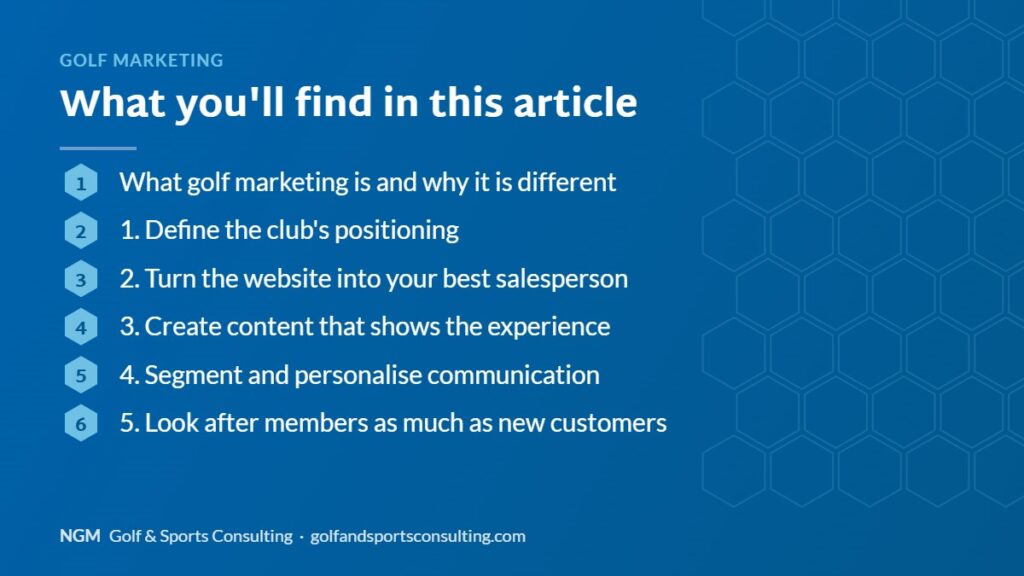
What golf marketing is and why it is different
Golf marketing combines sports marketing, tourism marketing and premium services marketing. The same club can target local members, international tourists, companies looking for events and families interested in the academy. Each audience has different motivations, channels and decision moments.
The product is also an experience: the condition of the course, the service at reception, the restaurant or the atmosphere at the 19th hole are all part of what is being sold. A good golf marketing plan takes all those touchpoints into account, not just advertising.
1. Define the club’s positioning
Before investing in campaigns, answer a simple question: why should someone choose this club and not another? It could be the course design, the location, the family atmosphere, the quality of the academy or the multi-sport offer. That differentiating message should appear on the website, on social media and in every sales conversation.
2. Turn the website into your best salesperson
The website is at the heart of any golf marketing strategy. It should load fast, look good on mobile and allow visitors to book a green fee or ask for information in just a few clicks. Real photos of the course, clear prices and a blog with useful content help it rank on Google and turn visits into customers.
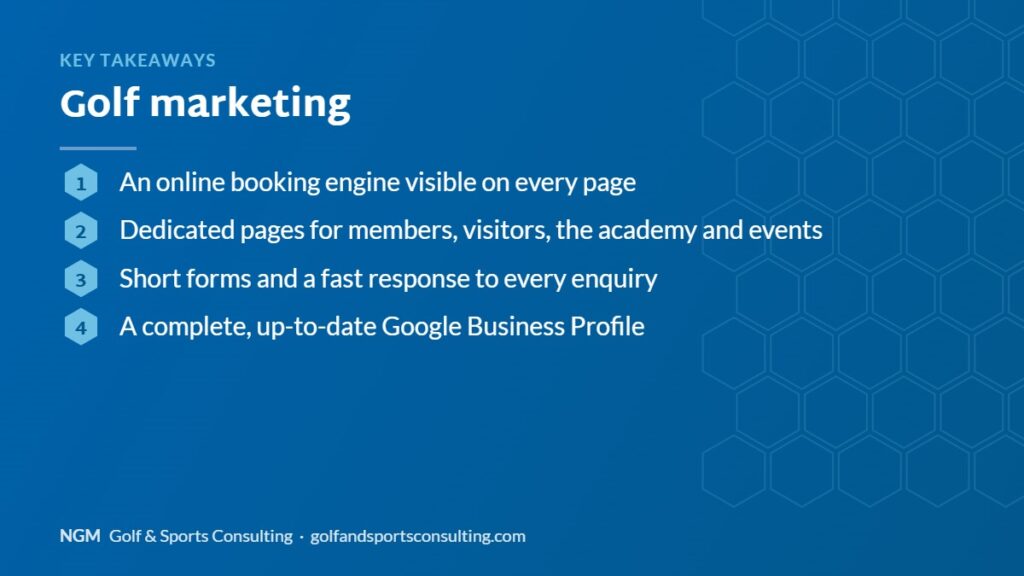
- An online booking engine visible on every page.
- Dedicated pages for members, visitors, the academy and events.
- Short forms and a fast response to every enquiry.
- A complete, up-to-date Google Business Profile.
3. Create content that shows the experience
Golf is sold through the eyes. Drone videos, reels with tips from the professional, hole-by-hole tours or members’ stories convey the experience far better than any brochure. A monthly content calendar keeps things consistent and makes the most of the season’s key dates.
4. Segment and personalise communication
It makes no sense to send the same newsletter to a 70-year-old member and to a tourist who played once two seasons ago. With a well-configured CRM or management software, the club can segment by profile, playing frequency or interests and send relevant messages: low-season offers, tournament reminders or invitations to clinics.
Personalisation is one of the golf marketing levers with the best return, because it increases response without increasing the budget.
5. Look after members as much as new customers
Winning a member costs much more than keeping one. That is why a large part of golf marketing should be aimed at the existing base: loyalty programmes, rewards for bringing friends, social events, satisfaction surveys and close, consistent communication.
A satisfied member is also the club’s best ambassador. Their recommendations and reviews carry more weight than any advertising campaign.
6. Measure, learn and adjust
Every marketing action should have a goal and an indicator. These are the ones we recommend tracking every month:
- Online bookings and their share of the total.
- Cost per booking or per enquiry in campaigns.
- New members and cancellations, and the reasons for each cancellation.
- Website traffic and conversions by channel.
- Average rating on Google and in internal surveys.
Free tools such as Google Analytics make it possible to measure website traffic and conversions without a big investment.
International players, an opportunity for many clubs
In tourist areas such as the Costa del Sol, the Valencia region or the Caribbean, international players can account for a very significant share of revenue. To attract them, a club needs a multilingual website, a presence on specialist portals and with tour operators, agreements with nearby hotels and prices adapted to the season of each source market.
The experience before arrival is also key: clear confirmations, information about club and buggy hire, restaurant recommendations and flawless service in English. A satisfied visitor comes back, recommends the course to their golf group and leaves reviews that attract new players from their country.

Common golf marketing mistakes
The most common mistake is relying entirely on the high season and disappearing for the rest of the year. Consistent communication is what builds a brand and fills the quiet months. Another frequent mistake is investing in advertising without first having a website ready to convert: the club pays for the traffic, but the visits are lost.
We also see clubs that talk only about their course and forget the people. Members, staff, professionals and greenkeepers are an essential part of the story the club has to tell.
Frequently asked questions about golf marketing
How much should a club invest in golf marketing? It depends on its size and goals, but what matters is planning the budget by action and measuring its return, rather than setting a figure without a strategy.
What gets better results, advertising or content? They complement each other. Content builds brand and ranking in the long term, and advertising speeds up specific results such as bookings or sign-ups.
Can golf marketing be done with a small team? Yes. With good planning, digital tools and external support at key moments, a small team can maintain an effective strategy.
At NGM Golf & Sports Consulting we help clubs design and implement their marketing and sales plan, from positioning and the website to campaigns, audiovisual content and measuring results.