
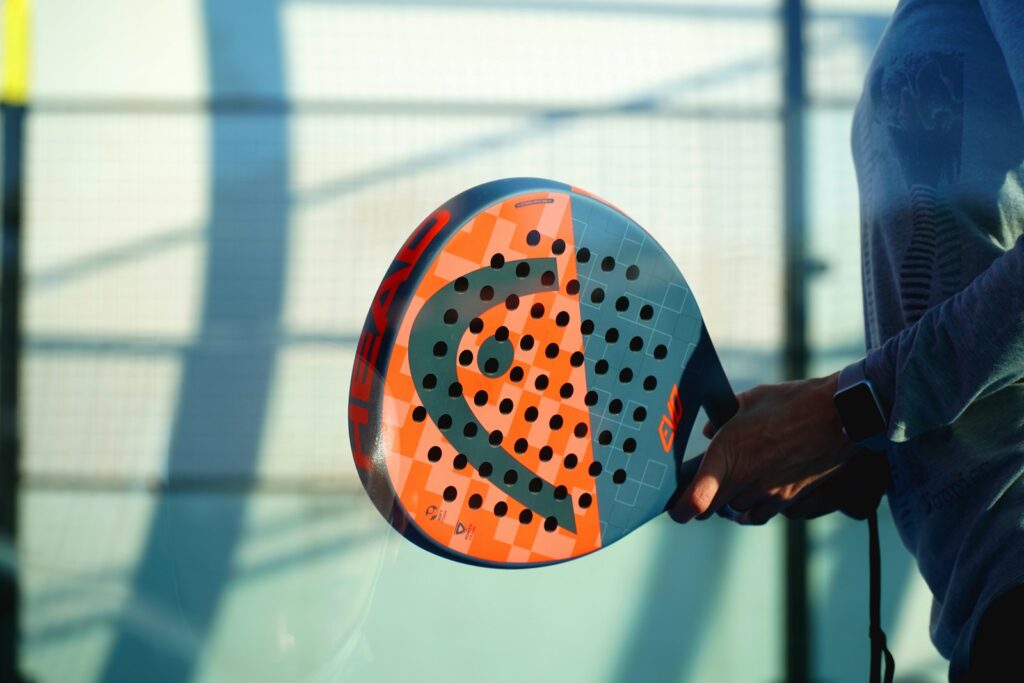
Can a golf club embrace the multi-sport model without losing its essence? Back in 2021 we warned on this blog about the risks of a sports club depending on a single discipline. Five years later, that recommendation has become a concrete need: the steady growth of padel in Spain is leading a growing number of golf clubs to build their own courts, and those that did so some time ago are clearly seeing the return.

Why padel fits especially well with golf
Padel and golf players have more in common than it seems: medium to high purchasing power, an interest in social sport and free time organised into specific slots. For a golf club, adding padel courts does not compete for the same member, it complements them: it attracts couples or families where only one person plays golf, and fills time slots (weekday afternoons, early weekend mornings) that the golf course does not always use.
The impact on attracting new members
A golf-only club has a market ceiling limited by the number of people who already play the sport in its catchment area. Adding padel widens that pool to a younger audience with a lower barrier to entry, who in many cases end up trying golf once they are members of the club for other reasons. In practice, it is a way of renewing the club’s membership across generations that goes beyond golf itself.
Diversifying revenue without diluting identity
The most common concern among club boards is that padel will “water down” the club’s long-standing golf identity. The experience of clubs that have integrated it well shows that this is avoided with a clear design decision: padel is presented as an extension of the club’s sporting and social offer, never as its new centre of gravity, and it is managed with the same service standards as the rest of the facilities.
How to design a multi-sport offer that makes sense
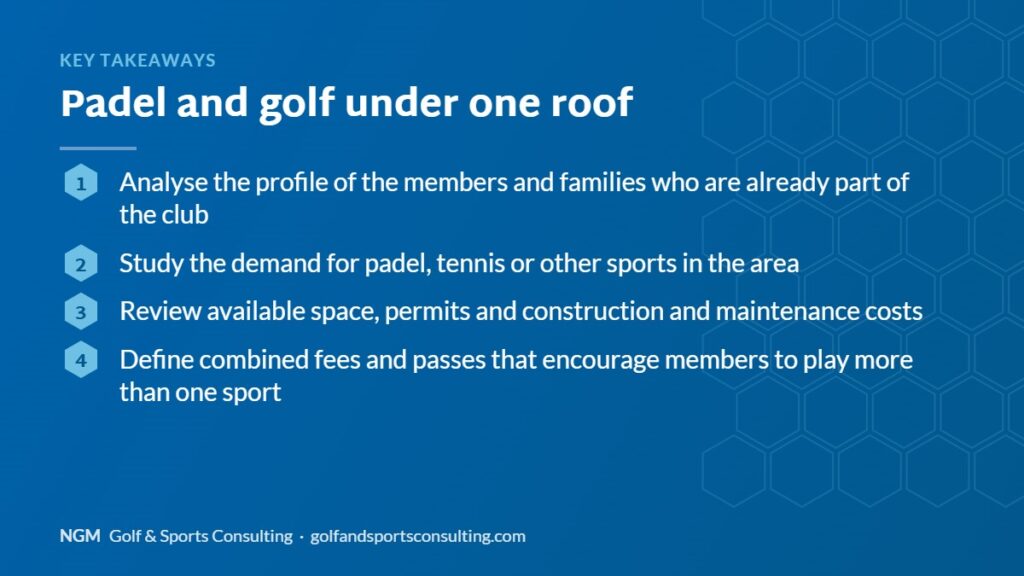
A multi-sport offer works when it builds on what the club already has and on what its members ask for. We recommend these steps:
- Analyse the profile of the members and families who are already part of the club.
- Study the demand for padel, tennis or other sports in the area.
- Review available space, permits and construction and maintenance costs.
- Define combined fees and passes that encourage members to play more than one sport.
The member’s multi-sport experience
The key to a multi-sport club lies not only in the facilities but in the experience: unified bookings, a shared activity calendar, mixed tournaments, a children’s academy covering several sports and a social area where everyone meets. When members see the club as a single place rather than several separate facilities, their engagement and their spending increase.
Indicators to measure multi-sport success
- Number of members who play more than one sport.
- Occupancy of courts and of the golf course by time slot.
- New members coming from padel or other sports.
- Catering revenue linked to multi-sport activity.
Frequently asked questions about the multi-sport offer
Does going multi-sport take away the golf club’s identity? Not if it is designed consistently: golf remains the core and the other sports complement it.
Which sport fits best? Padel, because of its popularity and low entry cost, but also tennis, fitness or children’s activities.
Common mistakes in multi-sport projects
One of the most common mistakes is adding activities without checking the real occupancy of the facilities. Opening a padel court or a fitness room makes sense if there is proven demand and schedules that do not compete with each other. Before investing, analyse booking data, member surveys and what competitors offer in the area.
Another mistake is running each sport as a separate business, with separate fees, bookings and communication. Members perceive disorder and the club misses the chance to sell combined packages. A single management platform, a flexible fee and a shared activity calendar simplify the experience.
Finally, many clubs forget to measure. Without indicators of usage per facility, revenue per member and satisfaction, it is impossible to know which activities add value and which should be rethought for the next season.
What to look at before investing in courts
Before building, analyse the real demand in the catchment area and the space available without taking land from golf practice areas. Above all, integrate court bookings and invoicing into the same management system as the rest of the club, so that a golf and padel member has a single fee, a single app and a single experience.
The sport’s own data confirms the trend: the Spanish Padel Federation has spent years documenting the steady growth in licences across Spain, one of the reasons why more and more multi-sport golf clubs are building their own courts to attract members and use their facilities in off-peak hours. At NGM Golf & Sports Consulting we analyse the feasibility of adding padel or other disciplines within our golf course management service, with digitalisation built in from day one. If you are considering it, let’s talk before building anything.