
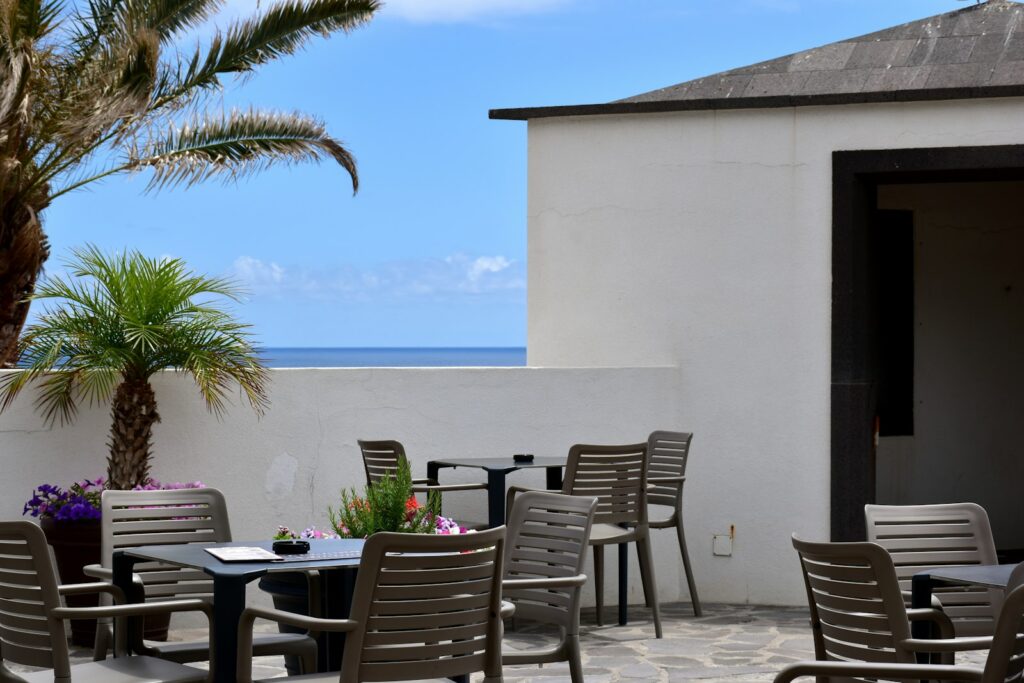
At many golf clubs, the restaurant and bar are run as a service that has to be offered to members, not as a business that should stand on its own feet. That way of thinking is probably the reason why so many clubs carry losses in their food and beverage area year after year without asking why.
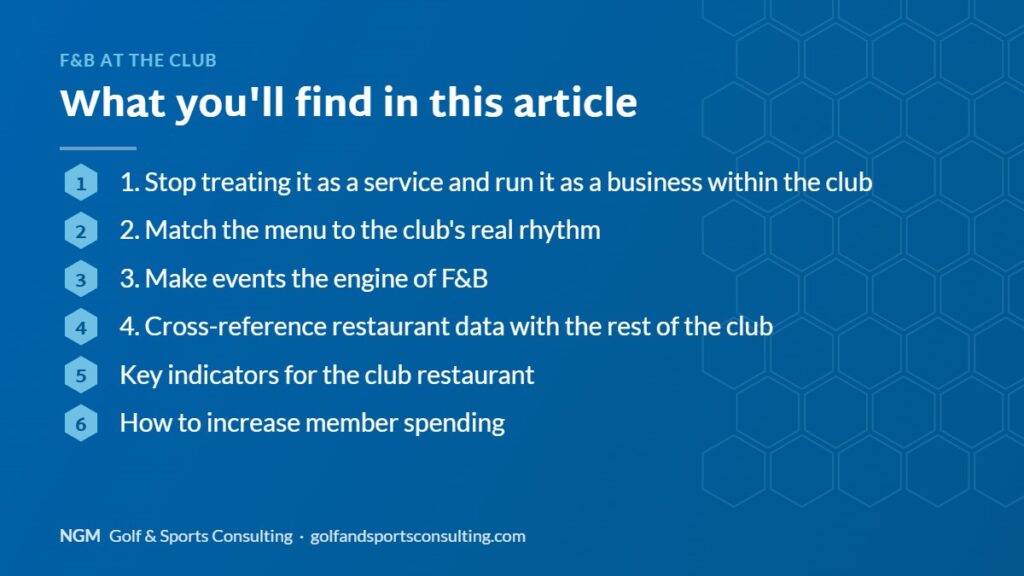
1. Stop treating it as a service and run it as a business within the club
The first change is one of mindset: F&B needs its own cost control, its own menu designed for margin and not just for variety, and its own revenue targets, just like the golf course itself. Without that change of approach, it is very difficult for any other lever to work.
2. Match the menu to the club’s real rhythm
A golf club restaurant has very marked peaks: breakfast before teeing off, lunch after the morning round, tournament weekends. Designing the menu and the staffing around those peaks, instead of keeping the same offer and team all day long, improves the margin without having to raise prices.
3. Make events the engine of F&B
Tournaments, birthdays, company lunches and social celebrations are by far the most profitable source of revenue for a club’s catering, because the volume is known in advance and purchasing and staffing can be optimised. A club that actively promotes its space for these events, beyond its members, multiplies the area’s revenue without investing more in facilities.
4. Cross-reference restaurant data with the rest of the club
When the restaurant’s point-of-sale system is connected to each member’s profile, previously invisible patterns emerge: which members never set foot in the restaurant, on which days of the week sales systematically drop, which dishes really sell. This information makes it possible to launch targeted promotions (for example, to members who play but do not eat or drink at the club) instead of generic discounts that erode the margin without changing behaviour.
Key indicators for the club restaurant
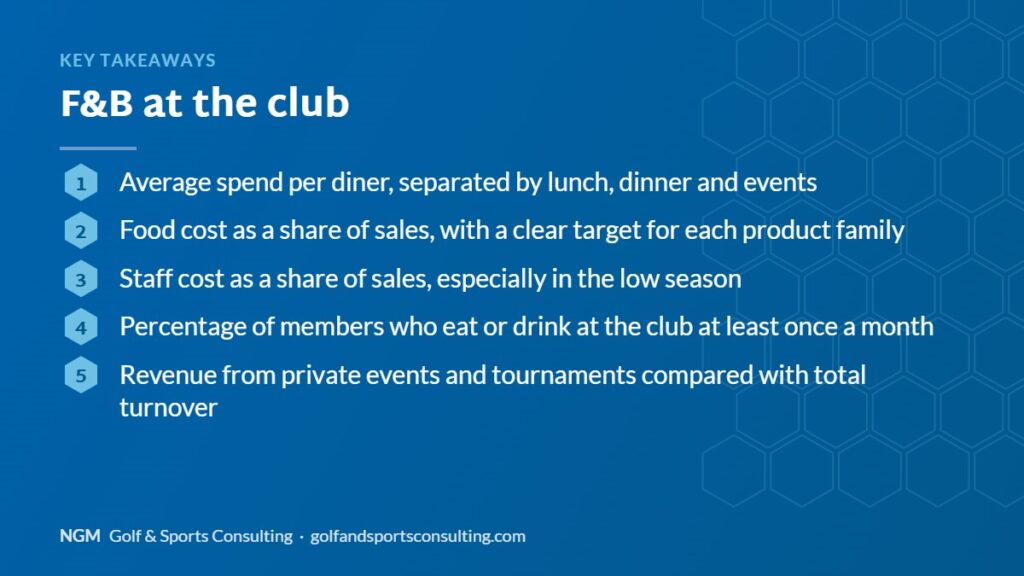
What is not measured cannot be improved. These are the indicators we recommend reviewing every month to know whether the club restaurant is moving in the right direction:
- Average spend per diner, separated by lunch, dinner and events.
- Food cost as a share of sales, with a clear target for each product family.
- Staff cost as a share of sales, especially in the low season.
- Percentage of members who eat or drink at the club at least once a month.
- Revenue from private events and tournaments compared with total turnover.
With these figures on a simple dashboard, management can take quick decisions: adjust the menu, add shifts or launch promotions on quieter days.
How to increase member spending
Members are the restaurant’s most valuable customers because they are already at the club. Yet they often finish their round and leave without having anything. Small actions change that behaviour: a breakfast offer for the first tee times, a quick menu after nine holes or a terrace with a good atmosphere at weekends.
Technology helps too. If the booking system knows each player’s tee time, it can send an invitation to the bar just as the round ends. And if the member’s account is integrated with the management software, paying becomes easier and spending rises naturally.
Mistakes that turn F&B into a cost centre
The first mistake is keeping a menu that is too long. More dishes mean more stock, more waste and more complexity in the kitchen. A short, seasonal menu with local produce is usually more profitable and conveys the club’s identity better.
The second mistake is not reviewing the terms of the concession. If the restaurant is outsourced, set quality targets, minimum opening hours and a fee linked to sales, so that the club and the operator share the same interests.
The third is forgetting communication. Special menus, themed dinners or tastings should be announced in the club’s newsletter, app and social media well in advance.
One last tip: involve the head chef in the club’s planning meetings. When the chef knows the calendar of tournaments, clinics and events in advance, purchasing and shifts can be adjusted, waste reduced and special menus proposed that increase the average spend.
5. Train the F&B team as part of the club experience, not as a separate service
Front-of-house and kitchen staff influence the perception of the club as much as the condition of the course. Investing in their training and in integrating them with the rest of the club’s team (so that they know regular members, their preferences and their special dates) turns the restaurant into one more reason for members to choose to spend time at the club rather than elsewhere.
The hospitality sector itself insists on measuring before acting, and the same applies to golf club restaurant revenue: without spending data cross-referenced with the rest of the club, any decision about the menu or the staff is taken blindly.
At NGM Golf & Sports Consulting we analyse this profitability within our golf course management service, also drawing on the good practices collected by the Royal Spanish Golf Federation in its club management reports, so that the restaurant stops being a service that is simply offered and is managed as the profitable business it can become. If your restaurant has not delivered the results it should for years, let’s talk.