
Social media has become the first shop window for many golf clubs. Before booking a green fee, asking about an academy or considering membership, most players check Instagram, Facebook or YouTube to get a feel for the atmosphere, the condition of the course and the kind of community behind it.
However, many clubs still treat their profiles as a notice board: tournament results, maintenance notices and little else. In this article we go through seven keys to make social media stop being an obligation and become a real tool for attracting and retaining members.
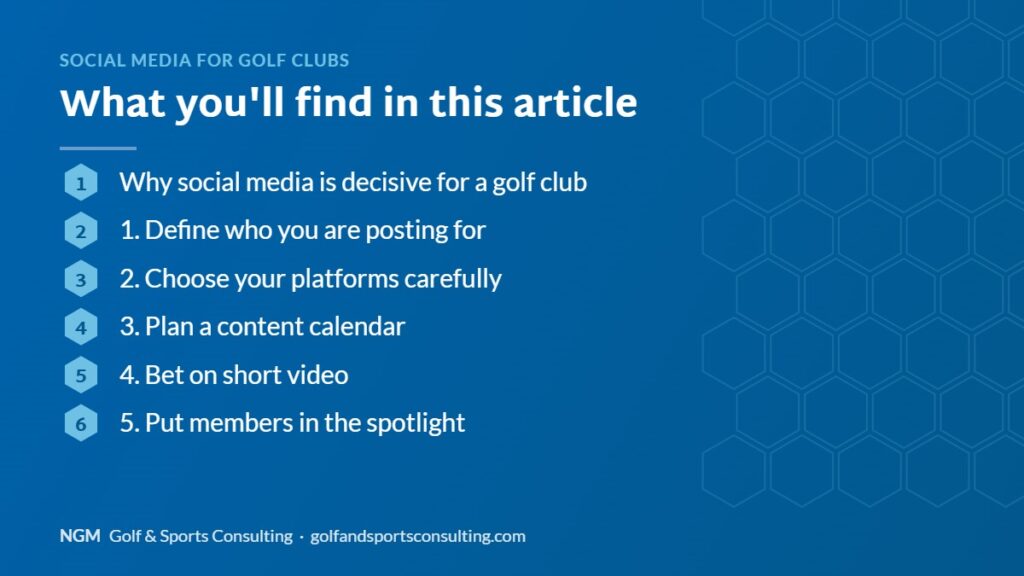
Why social media is decisive for a golf club
Golf is a very visual sport. A sunrise over the green, a hole with sea views or a great shot out of a bunker naturally generate interest. Social platforms make it possible to use that appeal to reach players who do not yet know the club.
Current members are there too. Seeing photos of their tournament, the summer dinner or the academy students strengthens their sense of belonging, which is one of the factors that most influences membership renewal.
Finally, social media has a direct impact on the business: every post can drive traffic to the website, the booking engine or the club’s contact form.
1. Define who you are posting for
Talking to a long-standing member is not the same as talking to a tourist looking for a course for their holiday or to a family that wants to sign their children up for the academy. Before posting, define two or three audience profiles and what each needs to know.
- Members: competition calendar, club news, course conditions and social activities.
- Visiting players: green fees, offers, the experience on the course and how easy it is to book.
- Families and new players: academy, beginner lessons and a welcoming atmosphere.
2. Choose your platforms carefully
You do not need to be everywhere. Instagram is the most powerful network for showing the course and the club’s atmosphere. Facebook still works very well with older members and for events. YouTube is ideal for longer content such as lessons or course tours, and LinkedIn helps attract corporate events.
What matters is keeping a consistent presence on a few social media platforms rather than an irregular presence on many.
3. Plan a content calendar
Improvisation is the main enemy of good social media. A monthly calendar prepared in advance makes it possible to combine different types of posts and make the most of the club’s key dates: tournaments, summer camps, open days or the high tourist season.
A balanced mix could be 40% value content (tips, lessons, rules), 30% club life (members, events, team), 20% promotion (offers and bookings) and 10% entertainment.
4. Bet on short video
Reels and short videos are currently the format with the greatest reach. A hole filmed with a drone, a thirty-second tip from the professional or the before and after of a green repair work much better than a static photo. You do not need a big crew: a good smartphone, natural light and a simple script are enough to get started.
5. Put members in the spotlight
The best posts are usually those featuring real people. Congratulating a tournament winner, introducing a veteran member or showing an academy student’s progress generates more engagement than any advert. Always with the consent of the people who appear, of course, especially if they are minors.
6. Connect social media with the website and bookings
Every post should have a clear goal. If a green fee offer is being promoted, the link must go straight to the booking. If a tournament is being announced, to the entry page. The less users have to search, the more conversions the club will get.
At NGM we work on marketing and sales strategies in an integrated way, so that social media, the website and campaigns pursue the same objectives.
7. Reply quickly and look after the community
Social media is a conversation channel. Replying to comments and messages within a few hours, thanking people for mentions and resolving complaints privately conveys professionalism and trust. A profile that does not reply feels just like an empty reception desk.
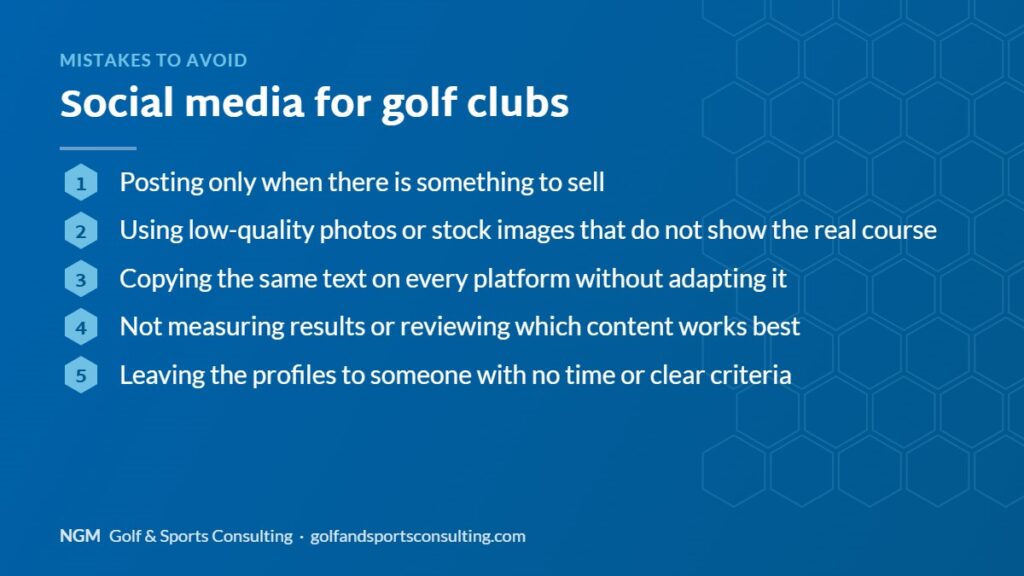
Common mistakes on a club’s social media
- Posting only when there is something to sell.
- Using low-quality photos or stock images that do not show the real course.
- Copying the same text on every platform without adapting it.
- Not measuring results or reviewing which content works best.
- Leaving the profiles to someone with no time or clear criteria.

Indicators to measure social media
Followers and likes are useful, but not enough. The indicators that really matter for a club are reach among people in the area, engagement rate, clicks to the website, bookings generated and enquiries. Reviewing them every month makes it possible to adjust the calendar and show the board the return on the work.
Platforms such as Meta Business Suite offer free statistics that, combined with web analytics, give a fairly complete view of the real impact.
Frequently asked questions about social media for golf clubs
How many times a week should a club post? Between three and five feed posts a week, plus stories almost every day, is a good starting point for most clubs.
Is it worth investing in social media advertising? Yes: with small budgets well targeted by area and interests, you can promote green fee offers, courses or events with a very good return.
Is it better to manage social media in-house or outsource it? It depends on the club’s resources. Often the most effective approach is a mixed model: the club team provides the day-to-day, and a specialist agency defines the strategy, produces the highest-quality content and measures the results.
If you want your club’s social media to work to attract players and build member loyalty, NGM Golf & Sports Consulting can help you define the strategy, produce the content and measure every action.