
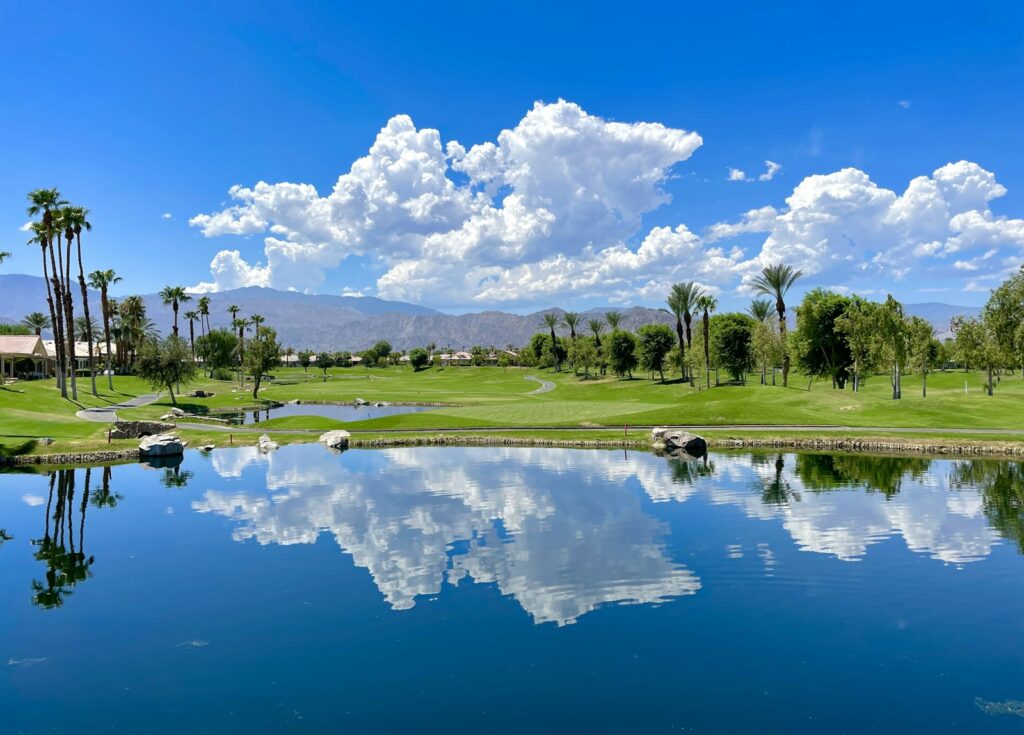
Obtaining an environmental certification is no longer just a matter of image. For years, sustainability on a golf course was seen as a regulatory obligation or, at most, a corporate social responsibility commitment. In 2026 that approach falls short: The R&A has pointed to data and technology as the future of sustainable course management, and more and more members and investors ask directly about a club’s environmental certification before committing to it.
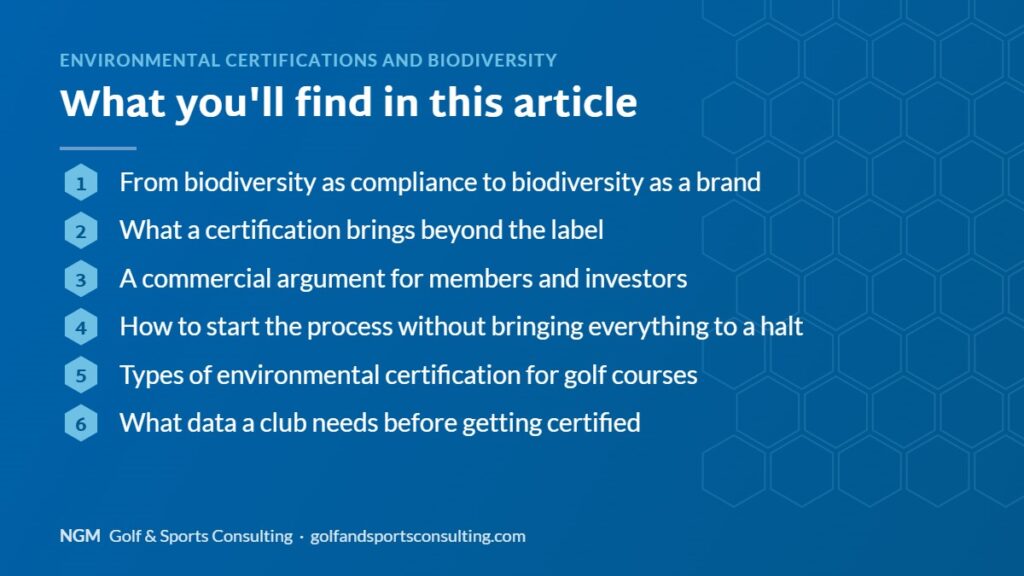
From biodiversity as compliance to biodiversity as a brand
Certifications and programmes focused on the functional biodiversity of a golf course, such as those that document and protect the fauna and flora living alongside the course, are no longer just an exercise in environmental compliance: they have become a differentiating element that a club can actively communicate on its website, its social media and its materials for investors.
What a certification brings beyond the label
Beyond external recognition, the certification process itself requires the club to systematically document and monitor water consumption, the use of plant protection products and the state of the course’s ecosystems, generating data that is then useful for optimising maintenance, connecting directly with the predictive greenkeeping tools we discussed in another of our articles.
A commercial argument for members and investors
For members who increasingly value the environmental commitment of the brands and places they are associated with, a visible environmental certification is one more reason to choose one club over another with similar conditions. And for an investor assessing whether to buy or finance a course, having certified environmental processes reduces future regulatory risk and makes it easier to access certain green financing lines.
How to start the process without bringing everything to a halt
There is no need to tackle full certification of the course in one go: most programmes allow the club to start with an initial diagnosis of its biodiversity and resources, identify two or three actions with real impact (reviewing irrigation, areas of native vegetation, reducing plant protection products in specific areas) and build the certification process on that basis, instead of waiting until everything is solved.
The R&A, golf’s global governing body, has pointed in its sustainability reports to data and biodiversity as the future of course management, and an environmental certification is the most tangible way to demonstrate that commitment to members and investors. At NGM Golf & Sports Consulting we support these processes within our golf course rewilding work, documenting real progress that can then be communicated as a brand argument, not just as one more regulatory requirement.
Communicating this progress simply, with concrete data and photos of the course itself, usually builds more trust among members and investors than any generic statement of environmental commitment without verifiable backing.
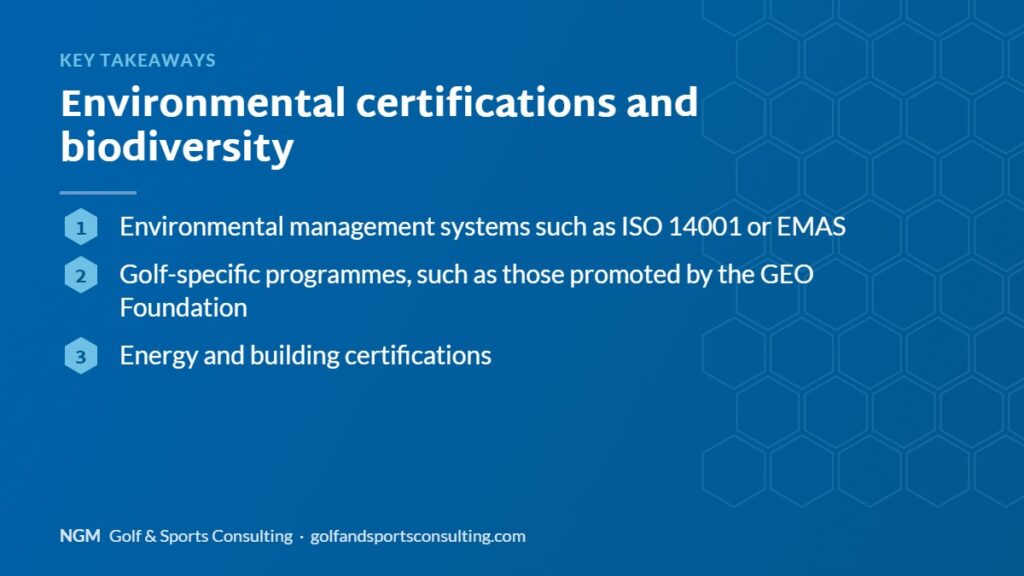
Types of environmental certification for golf courses
Not all certifications pursue the same goal. Before choosing one, understand what each assesses and how much effort it involves for the club:
- Environmental management systems such as ISO 14001 or EMAS: they organise all the club’s processes with environmental impact and require regular audits.
- Golf-specific programmes, such as those promoted by the GEO Foundation: they focus on water, energy, landscape, biodiversity and community relations.
- Energy and building certifications: applicable to the clubhouse, locker rooms or maintenance facilities.
The choice depends on the starting point. A club that already measures consumption and has a documented maintenance plan can aim for a full environmental certification. One starting from scratch usually gets more value by first putting its data and processes in order.
What data a club needs before getting certified
Any environmental certification requires the club to prove what it does with figures. That is why the first step is to measure: water consumption per hole and per season, energy used by the clubhouse and machinery, plant protection products applied, waste generated and the area devoted to natural zones.
This is where digitalisation makes the difference. Humidity sensors, weather stations, smart meters and management software that centralises the information make it possible to produce reliable reports without overloading the maintenance team. That same data then helps reduce costs, because every litre of water and every kilowatt saved has a direct impact on the bottom line.

How to communicate the environmental certification
Obtaining the label is only half the job. The other half is telling the story well. Explain to members what changes have been made and why, show improvement indicators on the website and use social media to show the fauna and flora that live alongside the course.
For investors and authorities, an environmental certification is proof of professional management and risk reduction. For members and players, it is a source of pride that strengthens their bond with the club. In both cases, the key is to communicate with real data and avoid generic messages.
Frequently asked questions about environmental certification
How long does it take to obtain an environmental certification? It depends on the starting point, but it usually takes between six months and a year, including data collection, the necessary improvements and the final audit.
Is an environmental certification mandatory for a golf course? No, but more and more authorities, insurers and investors value it, especially in areas with water restrictions.
Is environmental certification a cost or an investment? Planned well, it is an investment: savings on water, energy and products usually offset the cost of the process within a few seasons. If your club is considering an environmental certification, NGM can support you throughout the process.